
Shane Beamer’s future is a fair debate after a 4-8 season. The broader claim about South Carolina’s coaching job, though, does not line up cleanly with the school’s firing history.
South Carolina and Shane Beamer are back in a familiar national college football media debate: whether the Gamecocks job is built to end in dismissal. The claim that you coach at South Carolina to get fired is false, according to a new On3/GamecockCentral rebuttal that uses South Carolina football history to challenge the line.
The timing matters because Beamer’s program is under pressure after a 4-8 season in 2025. Criticism of the results is fair. But the bigger claim about South Carolina as a place where coaches are routinely fired is much harder to prove.
A sharp quote met hard numbers
The phrase at the center of the debate came from Jesse Simonton, a national college football writer who now runs the Substack Surrender Cobra, according to the On3 column. Simonton’s broader point was that Beamer’s tenure at South Carolina could end badly.
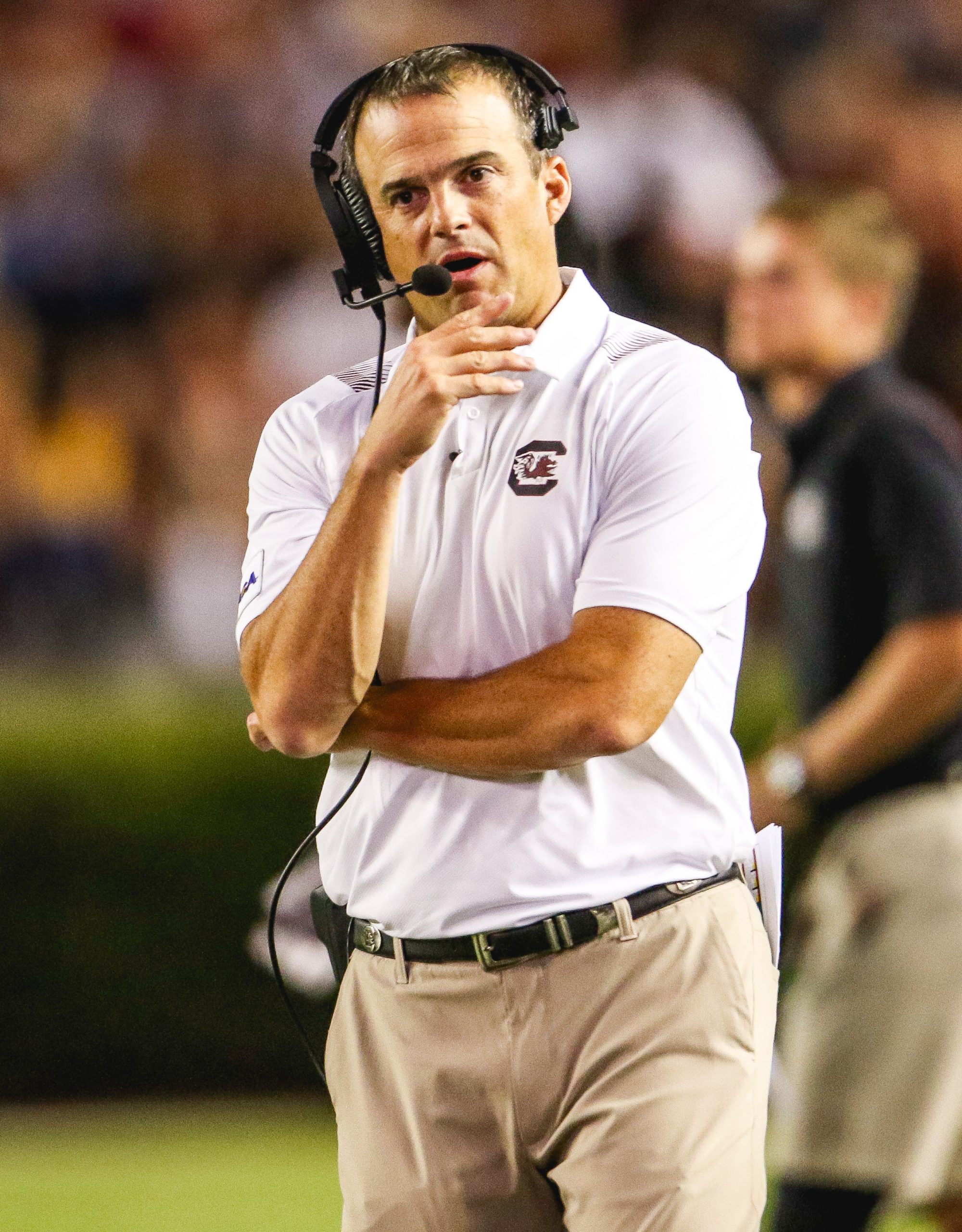
That prediction is not outrageous on its own. College football is a results business, and most coaching relationships eventually end with disappointment, a forced exit or a negotiated goodbye. A coach coming off a 4-8 season in the SEC is going to hear noise.
The problem is the wording. “You coach at South Carolina to get fired” sounds like a statement about the school’s pattern, not just a forecast about Beamer. That is where the rebuttal lands hardest: the Gamecocks’ actual firing history does not support the idea of an unusually quick trigger.
On3’s counterargument is straightforward. Since 1983, South Carolina has fired only three head football coaches. Since 1999, it has fired just one: Will Muschamp in 2020. Sparky Woods and Brad Scott were dismissed in the 1990s.
Beamer pressure is still real
None of that makes Beamer immune from scrutiny. South Carolina hired him to lead the program ahead of the 2021 season, and the job now comes with the same modern SEC pressure that surrounds nearly every coach in the league.
The 2025 record is the obvious problem. A 4-8 season is not the kind of stumble that can be waved away with history lessons, especially in a conference where roster churn, NIL spending, schedule strength and playoff expectations have made patience harder to sell.
That is the tension in this argument. South Carolina can be both more patient than its reputation suggests and still impatient enough to make 2026 important for Beamer. Those two ideas are not in conflict.
The fairest criticism of Beamer is about consistency. The least fair criticism is treating South Carolina as if it has a unique habit of chewing through coaches when the record says otherwise.
The SEC comparison changes things
The On3 column argues that South Carolina looks more stable when measured against the rest of the SEC. That matters because national narratives often treat the Gamecocks as a difficult job without separating “hard to win big” from “quick to fire coaches.”
According to the column, Tennessee has fired three coaches and forced another to resign just since 2008. Florida has fired six coaches since 1984 and had another forced out amid an NCAA investigation. Auburn has fired six in that span and forced out Pat Dye.
The same comparison continues elsewhere in the league. LSU has fired seven coaches since 1983, while Arkansas has fired eight, per the On3 analysis. The column notes the Arkansas number includes Bobby Petrino, whose exit came after the motorcycle-crash scandal that effectively ended his tenure.
South Carolina’s figure is smaller than most of those programs. The column says every SEC school that has been in the league for the full period since 2000 has fired more head coaches than South Carolina. Georgia matches South Carolina with three firings since 1983, while Alabama and Oklahoma have fired only two each, though the column notes both also forced out at least one other coach.
Resignations are not firings
Part of the confusion comes from how coaching exits are remembered. A coach leaving Columbia does not automatically prove the school pushed him out.
The column points to Joe Morrison, Lou Holtz and Steve Spurrier as examples of coaches whose final college jobs were at South Carolina but who were not fired by the school. Morrison died while still the Gamecocks’ coach. Holtz and Spurrier resigned or retired.
Those distinctions matter because they change the story from “South Carolina fires its coaches” to “South Carolina has often been the last stop for coaches.” That may still say something about the program’s ceiling, timing or difficulty. It does not prove a firing culture.
The column also rejects the idea that South Carolina has functioned as a stepping-stone job. It says no South Carolina head coach in the last 100 years has left to become a head coach at another power-conference program or in the NFL.
Why the label sticks anyway
South Carolina’s reputation is not created out of thin air. The program has had pockets of success, most famously under Spurrier, but it has not been a steady national power. That creates a gap between fan ambition and national perception.
To outsiders, that gap can look like a trap. South Carolina plays in the SEC, recruits against heavyweight brands and faces fan expectations shaped by the best years of the Spurrier era. When the wins do not come, the job can appear unforgiving.
There is also a media shorthand problem. It is faster to say a program is where coaches go to get fired than to explain decades of uneven results, administrative patience, recruiting challenges and conference context.
But shorthand can become sloppy. If the claim is about how difficult it is to win consistently at South Carolina, that is a legitimate debate. If the claim is that the school routinely fires coaches faster than its peers, the available numbers cut against it.
What 2026 can actually settle
The next season will not settle South Carolina’s entire historical reputation. It can, however, reshape the Beamer conversation.
If the Gamecocks rebound, the “coach to get fired” line will look even more like an overheated take attached to a bad season. If they struggle again, Beamer’s future could become a practical question rather than a theoretical media argument.
Even then, one possible firing would not retroactively prove the larger claim. Coaches get fired across the SEC. The issue is whether South Carolina does it more readily than its peers, and the numbers cited by On3 suggest the opposite.
The clean takeaway is this: Beamer has pressure to win, and South Carolina has reasons to demand improvement. But the claim that the Gamecocks job exists mainly to fire coaches is a narrative in search of better evidence.







Leave a Reply