
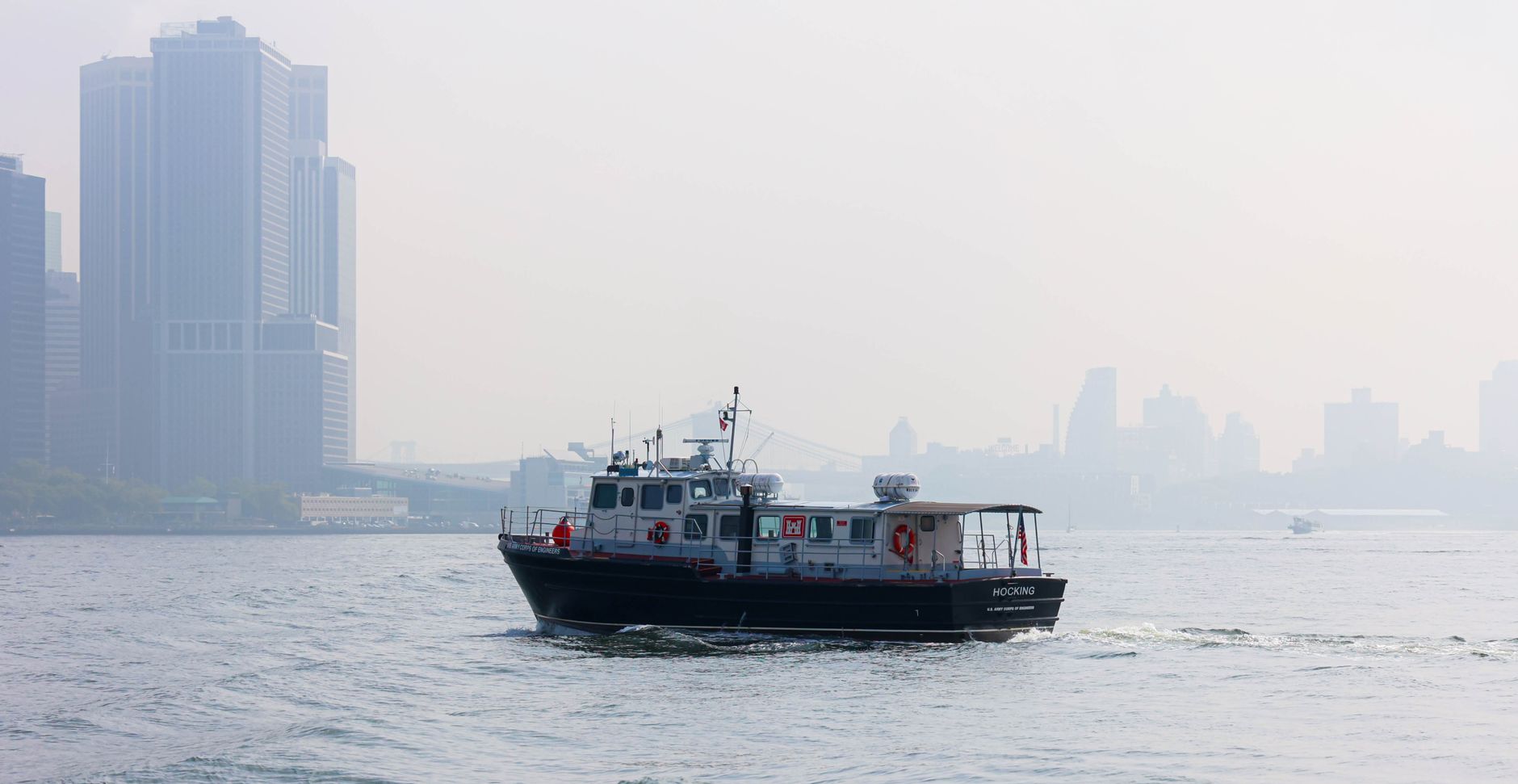
The episode turned a ceremonial harbor celebration into a flashpoint over protest, neutrality and who gets to set the rules on the water.
A New York ship parade meant to showcase sailing vessels and national celebration instead became a test of where public pageantry ends and political speech begins.
A vessel tied to an environmental group was removed from a fleet gathered in New York Harbor on Saturday after the U.S. Coast Guard said it displayed “politically charged” messages, according to Reuters and a syndicated summary of the report carried by the Bradenton Herald.
A celebration turned into a dispute
The parade was part of events marking the country’s 250th anniversary, with sailing ships assembled in one of the most visible waterways in the United States. These kinds of harbor parades are designed as tightly managed spectacles: timed movement, assigned positions, safety zones and a clear public-facing theme.
That is why the removal drew attention. The issue was not a vessel straying into the wrong lane or creating an obvious navigational hazard, based on the available reporting. It was the message being displayed.
Reuters reported that the Coast Guard said “politically charged” messages led to the vessel’s removal. A Reddit discussion referencing the report noted that participants had agreed not to fly politically charged flags or banners, though the full event rules and the exact enforcement process were not available in the extracted materials.
The identity of the vessel and the precise wording of the banners were not fully detailed in the available source brief. That matters, because the legal and public reaction can turn heavily on those specifics.
The Coast Guard’s role matters
The Coast Guard is not just another parade participant. On a crowded harbor, it is a central safety authority, responsible for managing traffic, security and emergency response around maritime events.
When officials say a vessel was removed from a parade, readers may hear a free-speech dispute. Maritime officials may see an event-control decision. Both frames can be relevant at once.
Large public events on the water are different from a protest on a sidewalk. Boats cannot simply stop, gather or disperse without consequences for traffic and safety. A single vessel’s conduct can affect an entire formation.
Still, the phrase “politically charged” is broad. Without more detail, it leaves open questions about how the rule was written, who decided the banners crossed the line and whether the standard was applied evenly to all participants.
Neutrality rules are rarely neutral
Parade organizers often try to keep official events from turning into political battlegrounds. That is especially true during anniversary celebrations, military flyovers, holiday parades or civic commemorations where the intended message is unity rather than advocacy.
Rules against political signs can sound simple: no campaign material, no protest banners, no partisan slogans. In practice, they can become difficult fast.
An environmental message, for example, may be seen by supporters as public-interest speech and by officials as advocacy outside the event’s approved theme. A flag or banner that one group considers a statement of values may be viewed by another as a political provocation.
That ambiguity is why these disputes spread quickly online. People are not just reacting to a boat being told to leave. They are reacting to who gets to decide which messages count as too political for a public celebration.
Free speech questions remain open
The incident is legally sensitive, but the available reporting does not establish a court finding, a lawsuit or a formal constitutional ruling. It would be premature to say the removal was lawful or unlawful based only on the brief accounts currently available.
Free-speech analysis often depends on the setting. A traditional public forum, a permitted parade, a government-sponsored event and a restricted safety zone can all be treated differently. The government may have more authority to regulate time, place and manner in some settings, especially where safety is involved.
At the same time, restrictions based on viewpoint are treated with deep suspicion under First Amendment law. If a rule bars all political advocacy in a limited event, that is one kind of issue. If it permits some viewpoints while excluding others, that is a much more serious concern.
The key missing details include:
- The exact language of the parade participation agreement.
- The wording and placement of the banners.
- Whether other political or advocacy messages were allowed.
- Who made the removal decision and under what authority.
- Whether the vessel was removed from the parade formation only or from a broader harbor area.
Why this struck a nerve
The timing helped fuel the reaction. A 250th-anniversary celebration is supposed to be a national milestone, but it arrives in an era when even public rituals can become contested terrain.
Ships, flags and waterfront ceremonies carry symbolic weight. They evoke military history, immigration, commerce, environmental protection and national identity. A banner on a vessel is not just decoration in that setting; it can be read as a statement in the middle of a staged national image.
That makes event managers cautious. It also makes activists interested. A harbor parade offers a rare platform: cameras, crowds, officials and a backdrop that instantly communicates scale.
The dispute reflects a larger pattern in American public life. Organizers want clean, non-disruptive civic events. Advocacy groups want visibility where the public is already watching. Authorities are left to draw lines that almost no one will see as purely administrative.
The unanswered questions now
For now, the clearest confirmed point is limited: a vessel in a New York ship parade was removed after the Coast Guard said politically charged messages were involved, according to Reuters reporting amplified by other outlets.
What remains unclear is whether the vessel’s operators will challenge the decision, whether event organizers will release the rules publicly, and whether the Coast Guard or parade officials will provide a fuller explanation of the enforcement call.
The answer will matter beyond this one parade. If public celebrations increasingly use broad bans on political messaging, organizers may avoid disruption but invite accusations of censorship. If they allow advocacy without limits, carefully planned events can quickly lose their intended focus.
The New York incident sits right in that tension. A vessel was removed, a rule was apparently enforced, and a celebratory harbor event became a reminder that even on the water, America’s arguments travel with the crowd.



Leave a Reply