
The Chicago-born pontiff’s Independence Mall moment was more than patriotic symbolism. It put a global religious leader directly inside America’s argument over what liberty requires now.
The setting could hardly have been more loaded: the first American pope, speaking near Independence Hall as the United States marked 250 years since the Declaration of Independence.
Pope Leo XIV did not use the moment simply to bask in patriotic novelty. In accepting the National Constitution Center’s Liberty Medal, he leaned into a harder theme: freedom is not just a national slogan, but a test of how people treat one another when the country is divided.
A pope in America’s birthplace
Pope Leo XIV, born Robert Francis Prevost in Chicago, was honored by the National Constitution Center as its 2025 Liberty Medal recipient, with a public Philadelphia celebration tied to the nation’s 250th anniversary.
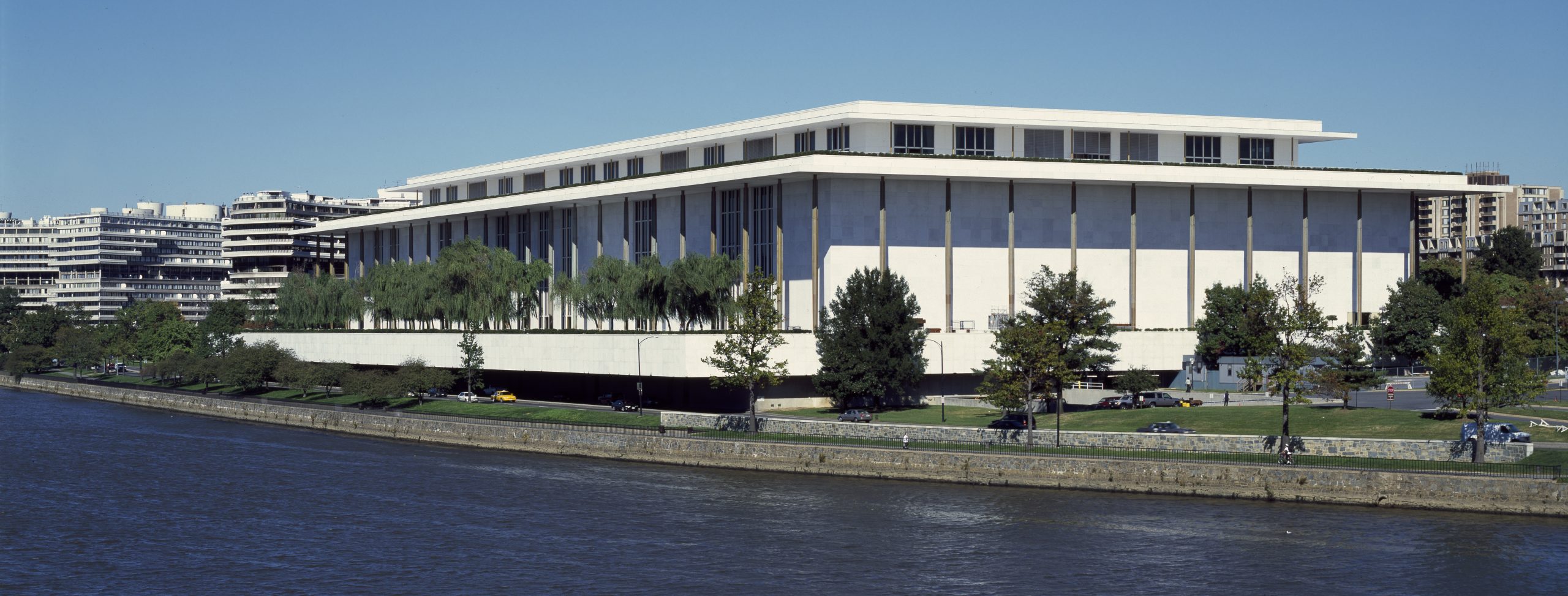
The center sits on Independence Mall, across from Independence Hall, where the Declaration of Independence was adopted in 1776. That geography gave the event unusual force: an American-born pope addressing liberty in the shadow of the country’s founding site.
According to the National Constitution Center, the Liberty Medal recognizes people of courage and conviction who work to secure liberty around the world. The medal was established in 1988 to commemorate the bicentennial of the U.S. Constitution and has been administered by the center since 2006.
The organization said Pope Leo was chosen for his lifelong work promoting religious liberty, freedom of conscience and freedom of expression. Former Presidents George W. Bush and Bill Clinton, co-chairs of the center’s board of trustees, presented the medal at the Vatican in April, with the Philadelphia celebration following as part of the anniversary year.
His message was not soft patriotism
In remarks broadcast to a large multi-faith audience in Philadelphia, Pope Leo called for “respect for the views of others” and an “ongoing effort to find common ground” in the cause of peace and reconciliation, both at home and abroad, according to CNN’s account of the event.
That may sound gentle. In today’s America, it is not. A public appeal for common ground from a pope who is also a native son lands inside a country where politics, religion, immigration and identity are often treated as zero-sum fights.
Leo also praised the United States’ history of welcoming immigrants, recalling how the country had opened its doors to successive waves of newcomers who helped shape its future. Coming from a pope with deep experience outside the United States, including years of ministry in Peru, that line carried more than ceremonial warmth.
He also spoke about the “inherent worth of every human life” and the role of Christian values in inspiring laws that protect life from conception to natural death. That placed a familiar Catholic moral argument inside a broader speech about freedom, conscience and national purpose.
Why Philadelphia claims him too
Leo is unmistakably Chicago-born. The Holy See’s official biography says Robert Francis Prevost was born on September 14, 1955, in Chicago, studied at Villanova University in Pennsylvania, entered the Order of Saint Augustine and was ordained a priest in 1982.
But Philadelphia has its own claim on the pope’s story. Villanova University says he earned a bachelor of science degree in mathematics there in 1977 before entering the Augustinian novitiate. The school has celebrated him as both the first Augustinian pope and the first Villanovan to become pope.
That local connection helped turn the Liberty Medal event into more than a Vatican-to-America broadcast. It was also a regional homecoming of sorts, especially for Catholics in the Philadelphia area who see Leo not only as pope but as someone formed in part by a nearby institution.
Vince Stango, interim president and CEO of the National Constitution Center, told CNN the event connected “a Philadelphia story, an American story, and a global story.” That is the central reason the moment resonated: Leo’s biography moves through all three.
The Liberty Medal carries weight
The Liberty Medal is not a routine civic plaque. Its recipient list has included figures associated with democracy, human rights, public service, war, reconciliation and culture.
Recent honorees listed by the National Constitution Center include filmmaker Ken Burns, Ukrainian President Volodymyr Zelenskyy, civil rights leader John Lewis, poet Amanda Gorman, Senator John McCain and Malala Yousafzai. Earlier recipients include Nelson Mandela, F.W. de Klerk, Sandra Day O’Connor, Jimmy Carter, Lech Wałęsa and the Dalai Lama.
That history matters because the award’s meaning is deliberately broad. It is not limited to elected officials or activists. It is meant to honor people who, in different arenas, have pressed the idea that liberty requires courage.
For Pope Leo, the medal adds an American civic frame to a papacy that was already historically significant. His election on May 8, 2025, made him the first U.S.-born pope, according to the Vatican biography. The Independence Mall spotlight gave that fact a national stage at a moment when Americans were already looking backward and forward at the meaning of 1776.
A careful line through division
Any American pope would face a complicated audience in the United States. Catholic teaching does not map neatly onto either major political party, and Leo’s early public profile has already been watched closely by both admirers and critics.
CNN noted that observers were aware of tensions between President Donald Trump and Pope Leo during the first year of Leo’s papacy and Trump’s second term. That made the Philadelphia speech especially sensitive: a pope speaking about liberty, immigration, human life and reconciliation in a country where each of those words can ignite a political fight.
Michael Moreland, a Villanova professor of law and religion, described Leo to CNN as a conciliatory figure who could be a source of unity and pride for American Catholics and Americans more broadly. That may be the most realistic read on Leo’s role: not apolitical, but not easily reduced to a partisan combatant either.
His speech seemed to follow that path. It was patriotic enough to end with “may God bless America,” but not empty enough to avoid the moral pressure points. He praised welcome for immigrants, defended the worth of life, and urged people to find common ground when the easier option is to retreat into camps.
The real test comes after applause
The novelty of the first American pope will fade. The harder question is whether American audiences will keep listening when Leo’s message moves from symbolism to substance.
His Philadelphia appearance worked because it gathered several powerful images at once: a Chicago-born pope, a Villanova alumnus, a global church leader, Independence Hall, the country’s 250th birthday and an award named for liberty.
But the speech also exposed the tension beneath the celebration. Americans often agree that liberty is precious. They disagree fiercely over what it demands from law, government, religion, communities and individuals.
Leo’s Independence Day message did not settle those arguments. It did something more useful: it reminded the country that freedom is not only a possession to celebrate, but a discipline to practice. For a pope whose American identity will always draw attention, that may be the line he returns to again and again.


Leave a Reply