
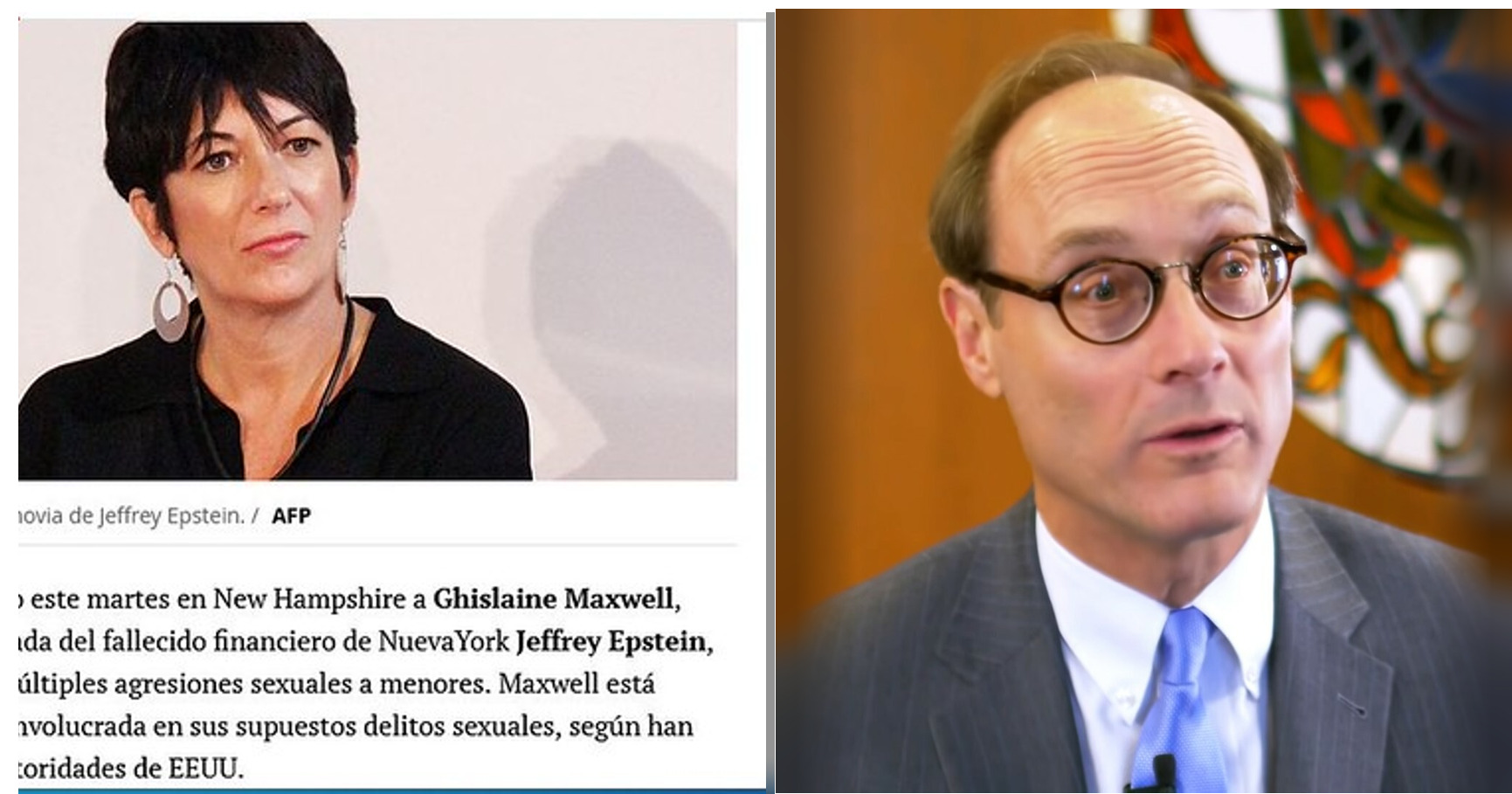
The ruling leaves Maxwell’s conviction and 20-year sentence intact after a court found her claims of new evidence and constitutional violations did not undermine the 2021 verdict. It also shows the steep legal hurdle facing prisoners after direct appeals have run out.
Ghislaine Maxwell will remain in prison after U.S. District Judge Paul A. Engelmayer denied her request for release in New York on Tuesday, August 25, 2026. Engelmayer, an Obama-appointed judge, rejected Maxwell’s challenge to her sex trafficking conviction and her claim that the case represented a miscarriage of justice, leaving her 20-year sentence in place.
The ruling is a decisive setback for Maxwell’s effort to use alleged new evidence and claimed constitutional violations to undo the jury verdict from her 2021 trial. It also underscores how limited the path becomes once a defendant’s appeals have been exhausted.
Judge rejects the central claim
Maxwell filed a habeas petition asking the court to set aside her conviction and free her from prison. She argued that information that could have exonerated her was withheld before trial and that the jury heard false testimony.

She described the combined effect of those alleged problems as a “complete miscarriage of justice.” But Engelmayer concluded that the petition did not establish a factual or legal basis to disturb the outcome of the trial.
According to an Associated Press report published by PBS, the judge wrote that Maxwell’s assertions rested on “speculation, distortions, and/or outright falsehoods.” He called the petition “demonstrably meritless.”
Engelmayer also wrote that Maxwell had not fairly put forward any disputed fact capable of changing the trial’s result. That finding goes to the heart of her request: a court will not reopen a final conviction merely because a defendant recasts arguments already tested by the legal system.
Why habeas petitions are difficult
A habeas petition is a legal mechanism for challenging imprisonment as unlawful. It can be an important safeguard when a person can show that a conviction or sentence violated the Constitution or federal law.
It is not, however, a routine second trial. The process usually comes after the standard appeal route has ended, and courts generally require petitioners to clear demanding procedural and factual thresholds.
That is the framework that shaped Maxwell’s loss. Her argument was not simply that the evidence could have been viewed differently; it was that newly available information and alleged misconduct had fundamentally corrupted the verdict. Engelmayer found that showing absent.
The distinction matters. A court assessing a post-conviction challenge must determine whether an asserted error actually has the potential to alter the result, not whether the defendant can identify a new disagreement with how the case unfolded.
The 2021 conviction remains intact
Maxwell, a British socialite and longtime associate of Jeffrey Epstein, was arrested in 2020 and convicted in December 2021 on sex trafficking-related charges. Her prosecution centered on allegations that she helped Epstein recruit and groom underage girls for sexual abuse.
She received a 20-year federal prison sentence. The latest ruling does not change that sentence or erase the jury’s finding of guilt.
Her case has remained in public view because of Epstein’s notoriety and the continuing scrutiny around people connected to him. Epstein was arrested on federal sex trafficking charges in July 2019 and died in a New York federal jail the following month; his death was ruled a suicide.
But the court’s decision concerns Maxwell’s own conviction, rather than unresolved public questions about Epstein’s broader network, records or associates. The judge’s task was narrower: whether Maxwell had shown grounds to vacate her conviction and release her from custody.
Obama appointment is not a legal issue
The description of Engelmayer as an Obama-appointed judge identifies who appointed him to the federal bench, not a factor in the legal standard applied to Maxwell’s petition. Presidents nominate federal judges, while the Senate confirms them; once on the bench, judges decide cases under governing law and the record before them.
Political labels can draw attention in a high-profile case, especially one involving Epstein. Yet Engelmayer’s written ruling focused on the substance of Maxwell’s allegations: the claimed evidence, the supposed constitutional violations and whether either could plausibly overturn the verdict.
That is also where competing views will remain. Maxwell has maintained that her trial was tainted by withheld information and false testimony. The judge found those claims unsupported to a degree that justified no further relief.
Maxwell’s lawyers were contacted for comment, according to the AP report. The available reporting did not indicate whether they would seek reconsideration or pursue another court challenge.
What the ruling does and does not settle
The immediate outcome is clear: Maxwell is not being released through this habeas case, and her 20-year prison term remains in force.
The decision does not necessarily foreclose every imaginable legal filing. Convicted defendants can attempt additional motions or seek review of particular rulings, though each route has its own deadlines, jurisdictional limits and high standards. A failed habeas petition does not automatically predict the fate of every future request, but it is a major obstacle.
It also does not answer wider political and public debates tied to Epstein. Those debates involve separate questions, separate records and, in some instances, separate government actions.
For Maxwell’s case, though, the court’s message was direct: the evidence and allegations in this petition did not justify undoing a conviction that has already survived the ordinary criminal process. Unless a later court intervenes, she will continue serving the sentence imposed after her 2021 conviction.










Leave a Reply