
The nightmare version of Yellowstone makes for viral headlines. The real story is more useful: what scientists watch, what an eruption could do, and why panic is the wrong takeaway.
Yellowstone has a way of turning a geology lesson into a doomsday scroll. Say “supervolcano,” and the mind jumps to buried cities, darkened skies and a continent holding its breath.
But the most important thing to know is also the least viral: scientists do not see signs that Yellowstone is heading toward a catastrophic eruption, and the eruption people fear most is not the one experts consider most likely.
The fear is bigger than the odds
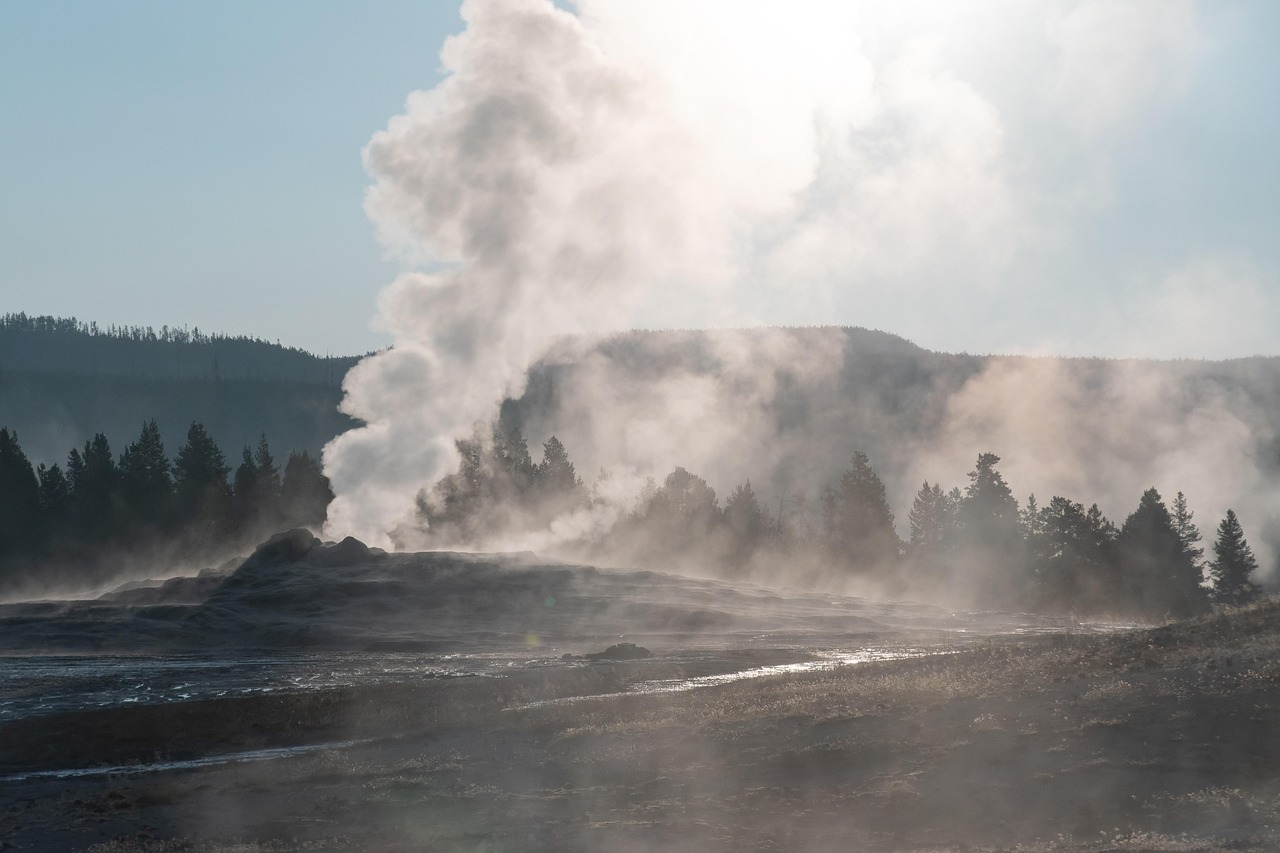
Yellowstone sits on one of Earth’s most closely watched volcanic systems. The park’s famous geysers, hot springs and steaming ground are surface clues to a deep reservoir of heat beneath parts of Wyoming, Montana and Idaho.
The U.S. Geological Survey and the Yellowstone Volcano Observatory have repeatedly emphasized that Yellowstone is active, but not in a state of emergency. Earthquakes, ground movement and changes in hydrothermal activity happen there regularly. By themselves, they are not proof that a giant eruption is coming.
The word “supervolcano” adds drama, but it is not the most precise scientific label. Yellowstone is a caldera system, meaning it has produced enormous eruptions in the distant past that caused the ground to collapse into a broad volcanic depression.
Those past events are real. The last major caldera-forming eruption at Yellowstone happened roughly 631,000 years ago, according to USGS summaries of the system’s history. Earlier major eruptions occurred about 1.3 million and 2.1 million years ago. That timeline is why Yellowstone gets attention — not because scientists believe it is on the verge of repeating itself.
The worst case would be brutal
If Yellowstone produced a full-scale caldera eruption today, the immediate danger near the volcano would be catastrophic. Areas close to the vent could face pyroclastic flows — fast-moving, superheated mixtures of gas, ash and rock that destroy nearly everything in their path.
The closest states, especially Wyoming, Montana and Idaho, would bear the harshest physical impacts. Communities near the caldera would not be dealing with a typical ash cleanup. They would be confronting an event that could bury landscapes and make large areas uninhabitable for a long period.
The wider U.S. would not be spared, but the threat would change with distance. Farther from Yellowstone, ashfall would become the dominant hazard. Volcanic ash is not fluffy fireplace ash; it is abrasive, glassy material that can damage lungs, engines, power systems, crops and water supplies.
A major eruption could shut down air travel across broad regions, disrupt trucking and rail movement, contaminate reservoirs and overload emergency services. Even thin layers of ash can create serious problems when they fall over cities, highways, farms and electrical infrastructure.
Ash is the sneaky danger
The most cinematic part of a Yellowstone scenario is the blast. The most disruptive part for many Americans could be the ash.
Depending on eruption size, weather and wind patterns, ash could spread far beyond the Rocky Mountain region. Prevailing winds often move material eastward, which means the central U.S. would be vulnerable to heavier fallout than many coastal areas.
The practical problems would pile up quickly:
- Airports could close because volcanic ash can damage jet engines and reduce visibility.
- Road travel could become dangerous as ash turns slick when wet and reduces traction.
- Power systems could fail if ash loads damage equipment or collapse lines and structures.
- Water supplies could be strained by contamination and clogged filtration systems.
- Farms could suffer from reduced sunlight, damaged crops and ash-covered grazing land.
That does not mean every state would be buried under feet of ash. Distance matters. Local weather matters. The eruption’s size matters. But “only a little ash” can still be enough to disrupt modern life because modern life depends on clean air intakes, clean water systems, functioning logistics and reliable power.
It would not end the world
Yellowstone doomsday claims often leap from “catastrophic” to “planet-ending.” That jump is not supported by the science.
A giant eruption would be a national disaster and a global economic shock. It could affect climate for a period of time if sulfur gases reached the stratosphere and formed sunlight-reflecting aerosols. It could shorten growing seasons, stress food markets and create public health emergencies across large regions.
But the available scientific assessments do not describe a Yellowstone eruption as a human-extinction event. The more realistic concern is cascading disruption: transportation failures, food supply pressure, respiratory hazards, damaged infrastructure and long recovery timelines.
That distinction matters. A disaster does not have to end civilization to be worth preparing for. It also does not become more likely just because it is frightening.
The likelier hazards are smaller
USGS scientists have said the most likely future volcanic activity at Yellowstone would not be a supereruption. More plausible events include lava flows or hydrothermal explosions.
Lava flows at Yellowstone can be huge by everyday standards, but they typically move slowly compared with explosive eruptions. They could still damage land and infrastructure inside or near the park, yet they would not blanket the country in ash.
Hydrothermal explosions are a different kind of threat. Yellowstone’s hot-water system can build pressure underground, then blast steam, water, mud and rock into the air. These events can be dangerous locally, especially in geyser basins and thermal areas where visitors may be nearby.
That is one reason park rules around boardwalks and thermal features are not just about protecting fragile scenery. They are also about staying alive in a landscape where boiling water and unstable ground are part of the environment.
Scientists watch for real warning signs
Yellowstone is monitored with seismic instruments, GPS stations, gas measurements, satellite observations and field surveys. The Yellowstone Volcano Observatory tracks earthquakes, ground deformation, heat flow and hydrothermal changes to look for patterns that might signal rising magma or changing pressure underground.
A major eruption would not be expected to arrive with no warning at all. Large volcanic systems usually show escalating unrest before significant eruptions, such as intense earthquake swarms, rapid ground movement, major gas changes or new thermal activity.
That does not make prediction simple. Volcanoes are complex, and unrest does not always lead to eruption. But monitoring gives scientists a way to distinguish routine volcanic behavior from something more concerning.
The clean takeaway is this: Yellowstone is dangerous in the way powerful natural systems are dangerous, not in the way viral apocalypse posts suggest. A worst-case eruption would be devastating. It is also very unlikely on human timescales. The better question is not whether Yellowstone will suddenly erase the map, but whether the public understands the difference between a real hazard and a headline built for panic.








Leave a Reply