
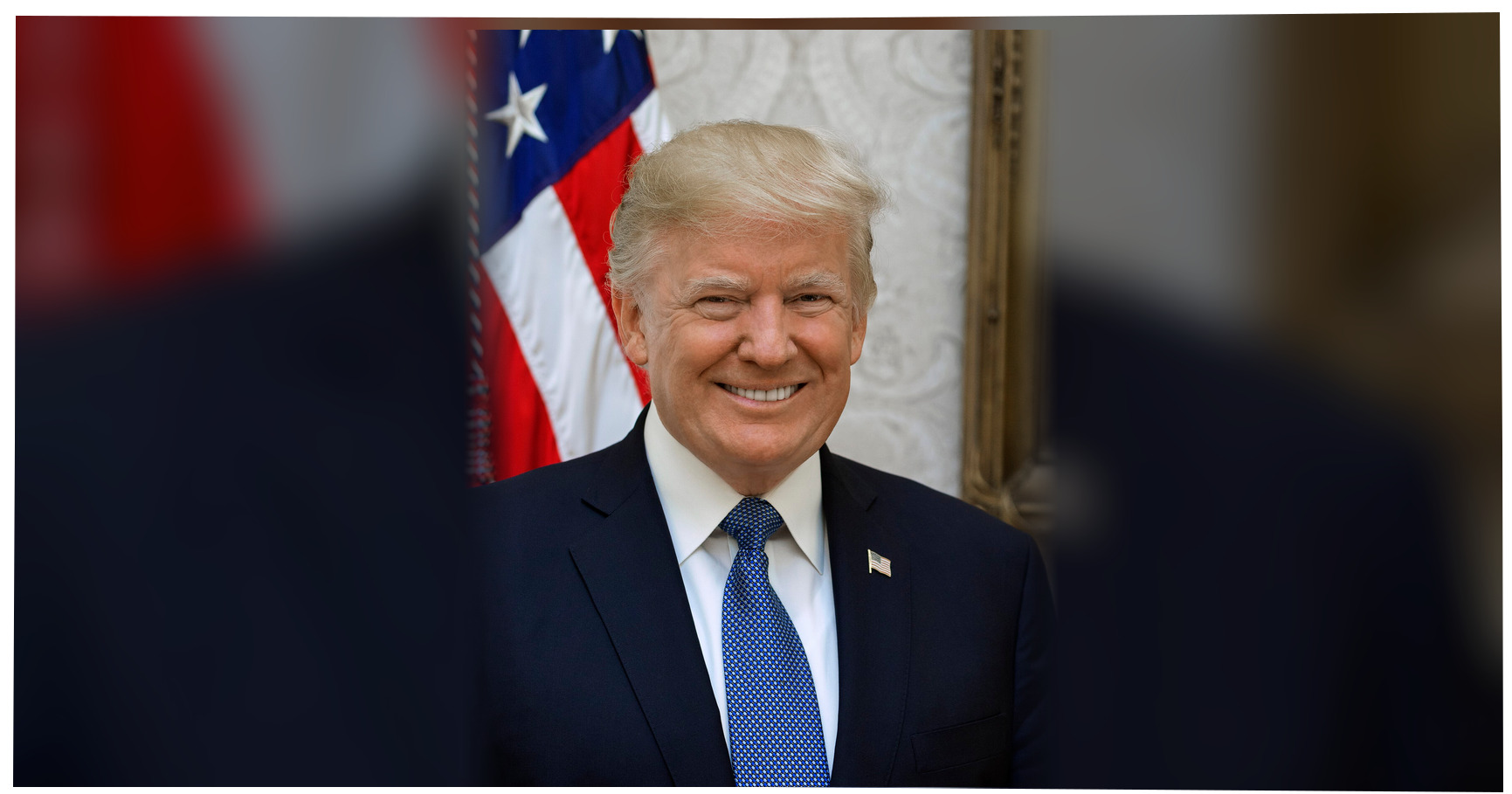
Pyongyang’s response suggests that scaling back exercises alone may not reopen meaningful talks. The dispute also puts Seoul and Washington’s security priorities back at the center of the North Korea debate.
North Korea rejected Donald Trump’s proposal to reduce or end joint U.S.-South Korea military drills, calling the overture an empty gesture. Pyongyang said an early end to exercises involving Seoul and Washington carried no meaningful significance, according to reporting by The Wall Street Journal, even as Trump sought to present the move as a less hostile signal toward North Korea.
The response matters because joint drills have long been both a military necessity for the U.S.-South Korea alliance and a political pressure point in diplomacy with Pyongyang. North Korea’s rejection indicates that cutting exercises, by itself, may not be enough to change the broader deadlock in U.S.-North Korea relations.
Pyongyang rejects the premise
North Korea’s message was not simply that it wanted more concessions. Its position, as described in the Wall Street Journal report, was that ending the drills had little inherent value.

That is an important distinction. If Pyongyang regarded the exercises as the central obstacle to dialogue, a reduction or early conclusion might have been a practical opening. By calling it an empty gesture, North Korea instead signaled that its objections reach beyond the schedule or scale of annual military training.
The report said Pyongyang nevertheless characterized Trump-Kim ties as excellent. That leaves room for leaders to claim that personal diplomacy has not entirely collapsed, while underscoring that warm rhetoric is not the same as an agreement on security policy.
North Korea has routinely portrayed combined U.S.-South Korean exercises as rehearsal for invasion. Washington and Seoul have maintained that the drills are defensive and are needed to preserve readiness under their alliance commitments.
Trump’s move tests an old lever
Reuters reported that Trump instructed the Pentagon to reduce military exercises with South Korea, saying the drills sent an “inappropriate and hostile” signal to North Korea. The proposed shift revived a familiar tool in negotiations: offer limits on exercises in hopes of lowering tensions and creating space for talks.
Military drills have been part of the diplomatic argument around North Korea for years because they involve a visible display of alliance coordination, aircraft, troops, command systems and planning. They are also relatively easier to pause, shorten or reshape than core issues such as sanctions, nuclear weapons or the U.S. military presence in South Korea.
That apparent flexibility can make exercises attractive to negotiators. It can also make them an unsatisfying concession to North Korea if Pyongyang believes the underlying alliance remains unchanged.
During his first term, Trump raised the cost of large-scale exercises and at times questioned their value. At a 2019 news conference in Hanoi, he said military exercises with South Korea cost the United States $100 million. His comments came after a failed summit with North Korean leader Kim Jong Un, illustrating how drills have repeatedly been woven into broader bargaining over nuclear diplomacy.
Seoul faces a difficult balance
For South Korea, the issue is not abstract. Combined exercises are designed to ensure that South Korean and U.S. forces can operate together during a crisis. Changes to those drills can carry political meaning in Pyongyang, but they can also affect perceptions of deterrence in Seoul and across the region.
Supporters of scaling back exercises argue that military signaling can feed a cycle of provocation and response. In that view, reducing the most conspicuous drills may lower the temperature, reduce the chance of miscalculation and make a diplomatic channel easier to sustain.
Critics see a different risk: unilateral reductions can be read as a weakening of resolve, particularly if North Korea does not make verifiable commitments in return. They also argue that a readiness activity should not become a bargaining chip when North Korea’s military capabilities remain a central concern.
Neither argument is cost-free. A diplomacy-first approach can create openings but may unsettle an ally. A deterrence-first approach can reassure Seoul but give Pyongyang another reason to denounce Washington’s posture.
Why an “empty gesture” lands hard
North Korea’s language puts Trump’s initiative in an awkward position. A policy change intended to signal flexibility has been publicly treated as insignificant by the country it was partly meant to influence.
That does not necessarily mean the step has no practical effect. Smaller or shorter exercises could still alter the immediate military and political atmosphere on the peninsula. But North Korea’s response suggests it does not see this change as sufficient grounds for changing its own approach.
The result is a familiar asymmetry in negotiations with Pyongyang. Washington and Seoul can make a visible adjustment quickly, while North Korea can reserve the right to decide later whether that adjustment earns any response.
It also raises a broader diplomatic question: Is the goal to restart contact, to reduce near-term tensions, or to secure specific commitments from North Korea? Those are related goals, but they are not interchangeable. A gesture that helps one may not achieve the others.
The larger dispute remains unresolved
The key unresolved issues are not answered by the reported drills reduction. It remains unclear what, if anything, North Korea would consider a meaningful step by the United States; whether Seoul supports the exact scope and timing of the changes; and what Washington would seek from Pyongyang in return.
There is also no indication in the available reporting that North Korea has accepted a new framework for talks or offered concrete reciprocal measures. Calling the proposed exercises change an empty gesture is a rejection of its diplomatic weight, not a roadmap for an agreement.
For now, the episode offers a narrower lesson. The U.S.-South Korea drills are consequential because they sit at the intersection of deterrence, alliance politics and diplomacy. Yet North Korea’s answer shows that reducing them cannot, on its own, resolve the mistrust that has defined the relationship for decades.
Trump may still view reduced exercises as a way to keep a door open. Pyongyang’s public response suggests that, if that door is to move, Washington and Seoul will need to confront the larger political and security demands behind the dispute rather than expect one drills-cut decision to do the work.








Leave a Reply