
The available reporting does not support the claim that Duckett was executed. His case instead highlights how a death warrant can collide with unresolved evidence questions at the final stage of a capital appeal.
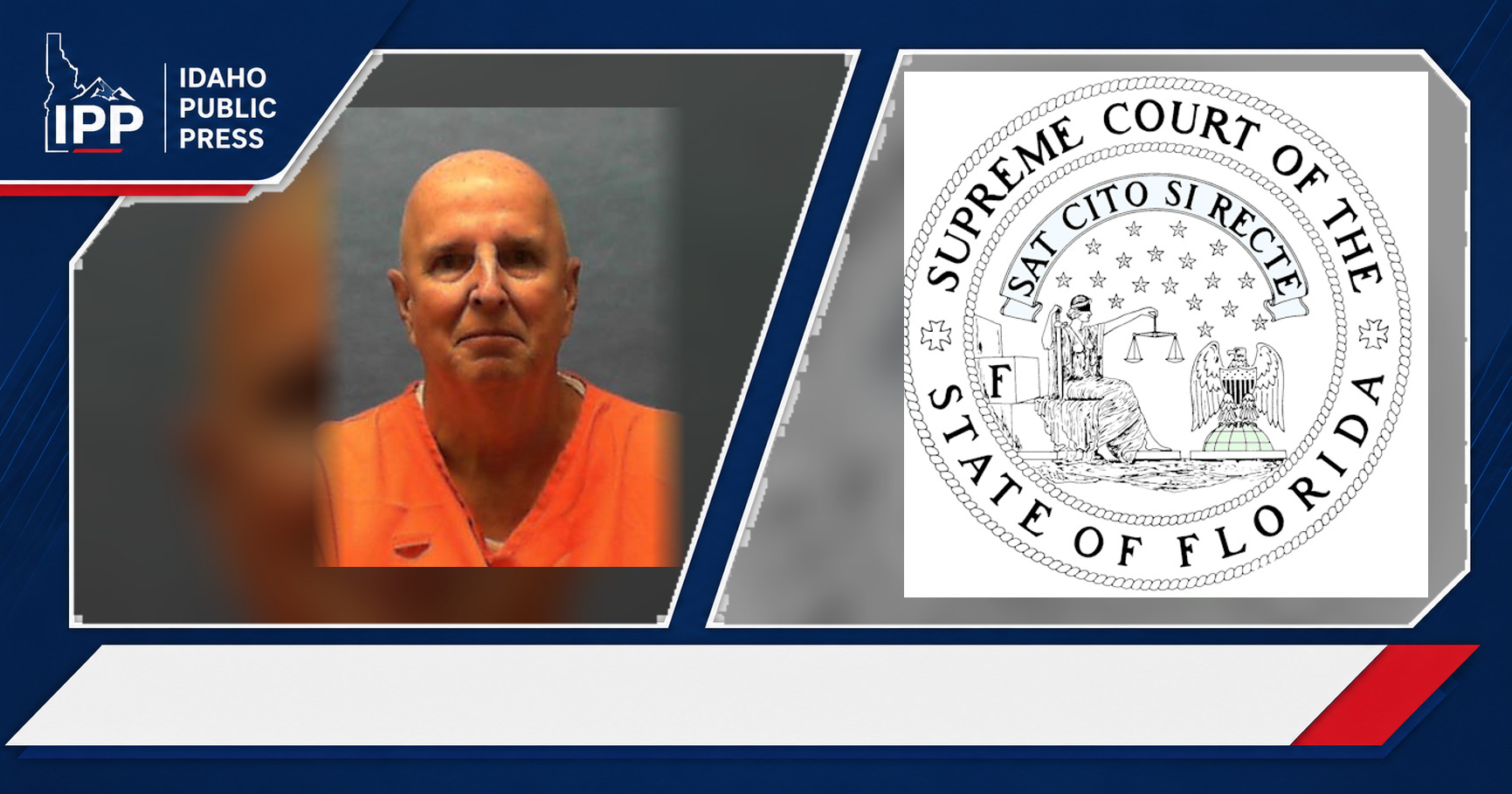
A Florida man was not executed for the killing of a girl, despite the source headline’s claim. The available reporting says the Florida Supreme Court halted the planned execution of James Aren Duckett, who was convicted in the 1987 killing of 11-year-old Teresa McAbee, while DNA testing sought by Duckett remains pending.
The distinction matters. Duckett’s case involves a death sentence, a scheduled lethal injection at Florida State Prison near Starke and a conviction that has stood for decades, but the court’s stay means the execution had not gone forward at the time of the Associated Press report.
The execution was put on hold
The Florida Supreme Court issued a stay for Duckett, 68, who had been scheduled to receive a three-drug lethal injection. A stay pauses an execution while litigation or another court-ordered matter is addressed; it does not overturn a conviction or automatically erase a death sentence.
According to the AP, Duckett was sentenced to death in 1988 after his conviction for first-degree murder and sexual battery. The court’s order also directed the state to provide an update on the status of the DNA testing.
That leaves the immediate timetable unresolved. If the stay is not lifted, there is no set public answer in the reporting for when, or whether, an execution would be rescheduled.
DNA testing is central now
Duckett sought DNA testing during his appeals, arguing that the results could exonerate him. A circuit court granted the request, and the testing was still pending when the state Supreme Court intervened.
That procedural detail is at the center of the current dispute. Supporters of carrying out capital sentences can view a long-final conviction as the product of extensive trial and appellate review. Defense lawyers and death-penalty opponents argue that an unresolved forensic test deserves careful consideration before an irreversible punishment is imposed.
The available reporting does not say what any pending DNA test has shown. It also does not establish whether the testing will ultimately change the legal outcome. For now, the narrow but consequential issue is that the evidence review had not been completed.
The 1987 killing behind the case
Court records described by the AP say McAbee disappeared on May 11, 1987, after she was seen getting into Duckett’s patrol car near a convenience store. Duckett was then a police officer in Mascotte, west of Orlando.
McAbee’s body was found in a lake the following morning, less than a mile from the store, officials said. A medical examiner determined that she had been sexually assaulted and drowned.
The AP reported that blood and hair evidence linked McAbee to Duckett, while tire tracks at the lake matched tires used on Mascotte patrol cars. Duckett’s and McAbee’s fingerprints were also found on the hood of his vehicle, according to court records.
Three teenage girls testified during the trial that Duckett had previously given them rides and made sexual advances, the AP reported. Those trial facts were part of the evidence considered in the conviction, though Duckett’s current request focuses on further DNA testing.
Florida’s death-penalty pace has quickened
The stay arrives during an unusually active period for capital punishment in Florida. The AP reported that Florida carried out 19 executions in 2025, the most overseen by Gov. Ron DeSantis in a single year since the death penalty was reinstated in the state in 1976.
That total exceeded Florida’s previous modern-era annual record of eight executions in 2014. Nationally, 47 people were executed in the United States in 2025, according to figures cited by the AP, with Florida carrying out more executions than any other state.
Florida executions are conducted by lethal injection. The Florida Department of Corrections uses a three-drug protocol consisting of a sedative, a paralytic and a drug intended to stop the heart, according to the AP’s account.
The state’s increased use of death warrants has put more attention on the timing of appeals. Capital cases can involve decades of litigation, but pending evidence issues may still lead courts to intervene close to a scheduled execution date.
What remains unresolved for Duckett
Duckett’s conviction and death sentence remained in place in the reporting available here. The stay did not amount to a finding that he is innocent, nor did it resolve his claim that DNA testing could be exculpatory.
At the same time, the execution was not a completed event. Any account stating that Duckett was executed for McAbee’s killing goes beyond the available AP report and conflicts with the Florida Supreme Court’s temporary halt.
The next meaningful development will be the status of the court-approved DNA testing and the state’s response to the high court. Until then, the case remains a pending death-penalty appeal involving an old conviction, a devastating killing and an unresolved forensic question.
The key point for readers
McAbee’s killing led to Duckett’s murder and sexual-battery convictions and a 1988 death sentence. But the current, source-supported development is the pause ordered by Florida’s Supreme Court, not an execution.
That difference is more than a technical correction. In a capital case, the status of testing, appeals and court stays determines whether the state can proceed with a punishment that cannot be reversed.









Leave a Reply