
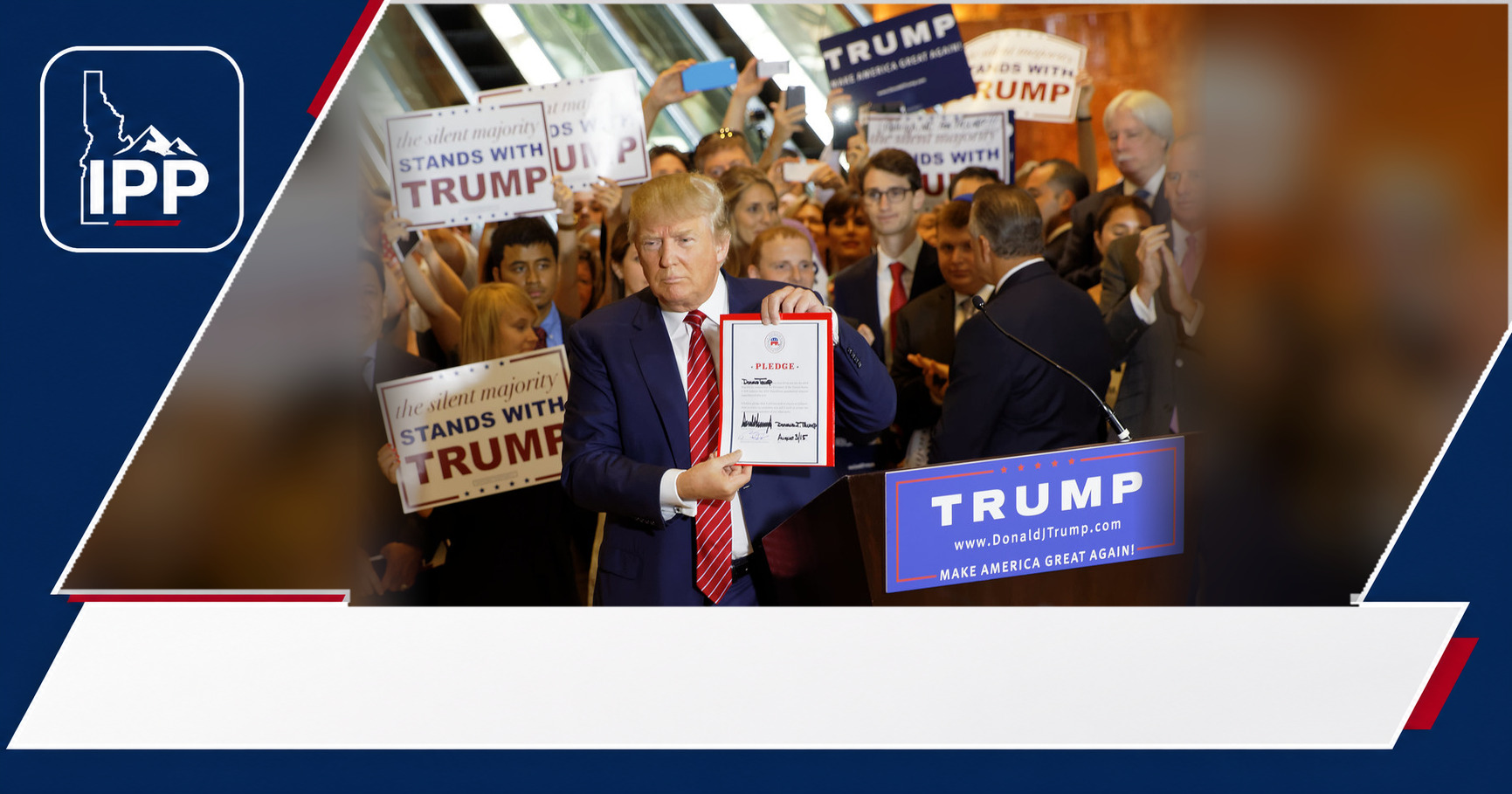
The remark is notable less because one person spoke sharply than because so few political actors benefit from doing so. Trump-era politics has made public dissent a test of loyalty, risk and timing.
A blunt remark was directed at Donald Trump in a Raw Story opinion item circulating on MSN/Microsoft Start, which casts the speaker as a “lone wolf” who told Trump what others supposedly lack the guts to say. The available trend extract does not identify the unnamed critic or quote the full line, so the verified story is the framing: a rare public confrontation of Trump, presented as unusual because blunt dissent around him often carries political cost.
Stripped to its core, the criticism is the kind Trump allies, rivals and media figures often dance around: Trump can be wrong, and someone has to say no plainly. That may sound ordinary in politics. Around Trump, it is not.
Why the “lone wolf” frame lands
The phrase “lone wolf” does a lot of work. It suggests isolation, risk and a break from the pack. In a political movement built around personal loyalty to Trump, that is the real charge inside the headline.
Raw Story labeled the item as opinion, which matters. “Nobody else has the guts to say” is not a measurable fact; it is an argument. But the argument resonates because Trump’s public orbit has repeatedly rewarded agreement and punished defection.
That is why even a vague trend headline can travel. Readers understand the implied scene before they know the details: someone finally says the quiet part directly to Trump, and the drama comes from how unusual that directness has become.
The criticism is really about power
The apparent message to Trump is not merely personal. It is about power and accountability: a leader surrounded by people who fear his reaction can become harder to challenge, even when a challenge is politically or practically necessary.
Trump’s defenders would dispute the premise. They often argue that he is challenged constantly by Democrats, prosecutors, judges, journalists, former aides and foreign leaders. From that view, the idea that “nobody” confronts him sounds theatrical.
But the sharper question is not whether Trump has critics. Of course he does. The question is whether the people whose support he values — elected Republicans, conservative influencers, donors, advisers and ambitious successors — are willing to tell him hard truths in public.
That is where the “lone wolf” framing becomes politically meaningful. It points to the difference between opposition from outside the tent and dissent from people who risk losing standing inside it.
Loyalty has become a currency
Trump did not invent political loyalty tests, but he made them central to modern Republican politics. Endorsements, primary challenges, social media attacks and access to the MAGA base all became tools for rewarding those who stayed close and warning those who broke away.
The pattern was visible after the Jan. 6 attack and Trump’s second impeachment. Most House Republicans who voted to impeach him either left Congress, lost primaries or became exceptions rather than models for the party’s future. Liz Cheney and Adam Kinzinger became national symbols of anti-Trump Republican dissent, but not examples many GOP politicians rushed to copy.
That history explains why bluntness can look brave even when the words themselves are simple. Saying “you are wrong” is easy in theory. Saying it when Trump can turn a large share of Republican voters against you is a different calculation.
For ambitious politicians, the lesson has often been clear: criticize Trump carefully, indirectly or after the immediate danger has passed. Direct confrontation is reserved for people with little left to lose, a secure independent base or a willingness to accept the consequences.
Opinion headlines can blur the scene
There is also a caution here for readers. The available source material confirms a headline and publisher context, not the identity of the critic or the exact words used. That limits what can responsibly be reported as fact.
Opinion writing is designed to make a claim. It often uses compression, exaggeration and drama to sharpen a point. A headline saying someone told Trump what others lack the guts to say may be capturing a real exchange, a broader posture or the columnist’s interpretation of a political moment.
That does not make the piece meaningless. It does mean readers should separate three things: what someone actually said, how the columnist characterizes it and why the characterization is attracting attention.
- Fact: The item is framed as an opinion piece about a blunt confrontation of Donald Trump.
- Unknown from the available extract: The critic’s identity and the exact quoted remark.
- Interpretation: The claim that others lack the courage to say the same thing.
That distinction is especially important in Trump coverage, where headlines often double as arguments in an ongoing loyalty fight.
Why direct criticism still matters
Direct criticism matters because political systems need friction. Presidents, former presidents and party leaders all benefit from advisers and allies who can deliver bad news before reality does it for them.
When public figures avoid confronting Trump directly, their reasons can be strategic rather than cowardly. Some may believe private persuasion works better. Some may fear helping Democrats. Others may think criticizing Trump only strengthens his bond with supporters who see every attack as proof he is threatening the establishment.
Those are real arguments. But they also create a convenient loop: if everyone waits for someone else to speak first, the bluntest message never arrives from the people whose words would carry the most weight.
That is why the “lone wolf” label has bite. It suggests not just one person’s courage, but a surrounding silence.
The unanswered question
The central unknown is whether this kind of confrontation changes anything. Trump has built a political identity around resisting criticism, reframing attacks as proof of persecution and forcing opponents to respond on his terms.
A single blunt remark, even a memorable one, rarely shifts that dynamic by itself. Its impact depends on whether others echo it, whether it reaches voters Trump cares about and whether it comes from someone he cannot easily dismiss.
For now, the notable part is the gap between how normal such criticism should be and how exceptional it is being sold as. In a healthier political culture, telling a powerful figure he is wrong would not require a “lone wolf.” It would be part of the job.
That is the real takeaway from the opinion framing: the confrontation is less about one unnamed critic than about the incentives surrounding Donald Trump. The sharper the loyalty test, the more even plain speech starts to look like an act of rebellion.






Leave a Reply