
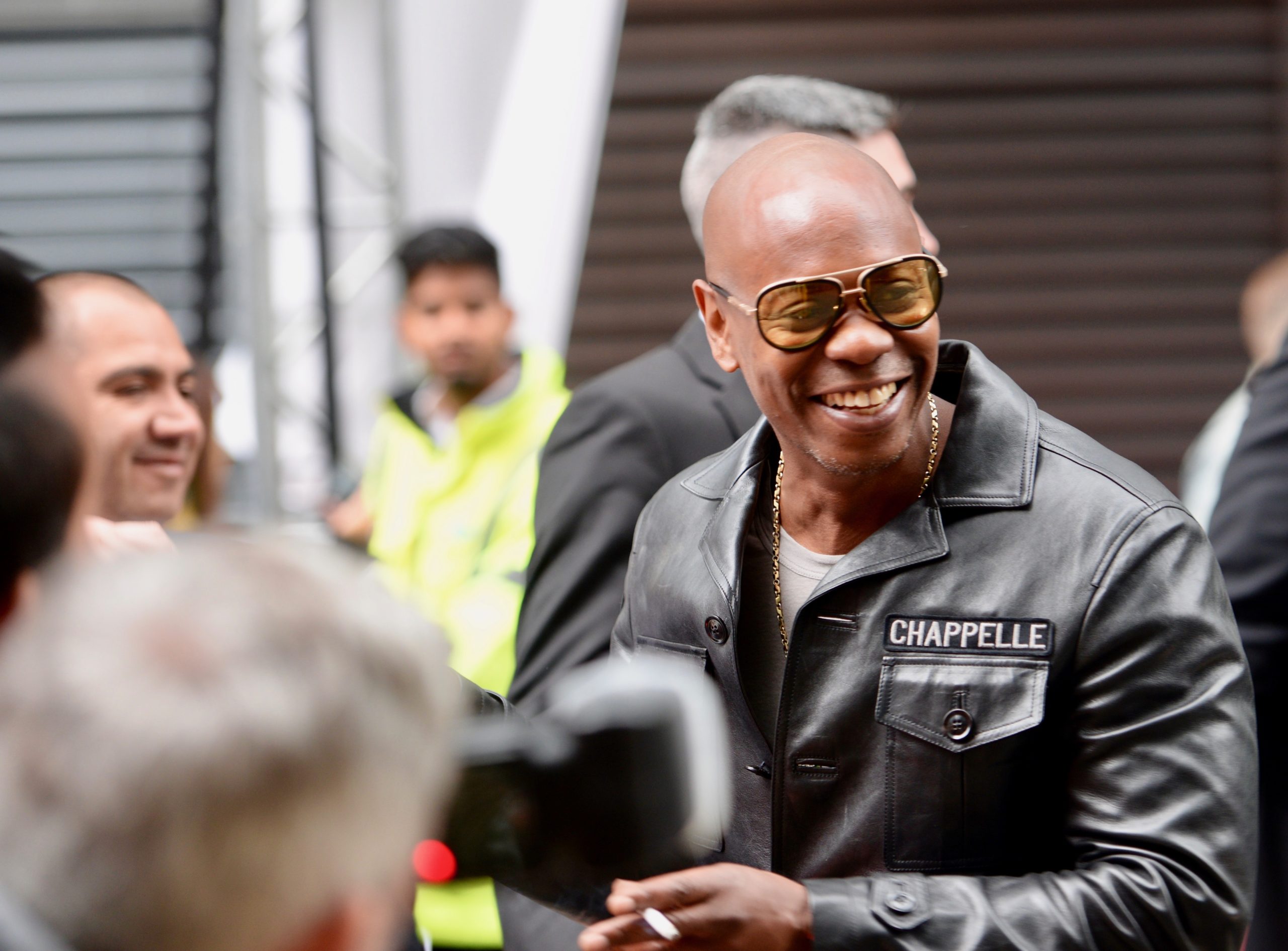
The comedian’s answer to a charged question about America has put his long-running argument about comedy, power and Trump back in the spotlight.
Dave Chappelle is rarely a neat fit for the political news cycle. That is exactly why his latest remarks about Donald Trump are traveling so quickly.
The moment is easy to package as another celebrity taking a swing at Trump. But the sharper point is about something bigger: what happens when the language of insult, performance and shorthand moves from a comedy stage into the presidency.
A comic answers a political trap
A HuffPost story distributed through MSN highlighted Chappelle answering what it described as a “loaded question” about America with a blunt message involving Trump. The phrasing matters because Chappelle has spent years resisting simple political boxes, even when he is talking directly about presidents, culture wars and free speech.
In an NPR interview published in April, host Michel Martin asked Chappelle about doing comedy at a time when the president “expresses things that many people find deeply offensive” and whether that changes his work. Chappelle’s answer was not to say that politics had made comedy impossible.
“No,” he said, according to NPR’s transcript. Then he drew a line between Trump’s public rhetoric and a comedian’s job, saying Trump was a “bad example” because he has “a dismissive shorthand about people.”
That phrase is the center of the whole exchange. Chappelle was not merely objecting to a politician being rude. He was arguing that the same verbal move has a different meaning depending on who uses it and from what position of power.
The line Chappelle drew
Chappelle’s point is simple, but it cuts. A comedian can reduce a complicated idea to a joke because the stage is built around exaggeration, misdirection and release. A president’s words land differently because they are backed by institutions, policies and an audience trained to treat them as signals.
That is why the comparison between Trump and comedians has always been slippery. Trump has often been described by supporters and critics alike as a performer, a showman and an entertainer. Chappelle’s answer pushes back on the idea that performance style erases the responsibilities of office.
In the NPR exchange, Chappelle said the interface is “way different” when a comedian is speaking onstage than when the president of the United States is speaking. The distinction is not about whether jokes can offend. It is about what offense can do when it comes from power.
That is the real sting in his Trump answer. Chappelle is defending comedy’s right to be rough while refusing to give political power the same license.
Why the answer traveled
The ingredients were built for online spread: Chappelle, Trump, America and a question framed as too loaded to answer cleanly. Each one carries its own audience, grievance and expectation.
Chappelle has long been a figure people quote when they want a comedian to say the unsayable. Trump remains a figure whose every mention can turn a cultural interview into a political fight. Put the two together, and even a nuanced answer gets flattened into a headline war.
But Chappelle’s recent media appearances have not been only about Trump. NPR framed its April conversation as a discussion of “comedy in the age of Trump,” but also noted that the interview touched on Chappelle’s jokes about trans people and other controversies around his work.
PBS NewsHour’s “Settle In” also described a wide-ranging Chappelle interview with Amna Nawaz in Yellow Springs, Ohio, covering free speech, local journalism and his decision to perform in Saudi Arabia. In other words, the Trump moment sits inside a broader argument Chappelle keeps returning to: who gets to speak, who gets punished and who gets power.
Not a clean partisan moment
That is why reading this as a tidy partisan statement misses the texture of it. Chappelle was not acting like a campaign surrogate. He was doing something more characteristic: taking the premise of a political question and turning it toward the culture that produced the question.
For Trump critics, his remarks may sound like a validation of concerns about the former president’s language. For Trump supporters, the reaction may sound like another entertainer taking shots from a safe distance. Chappelle’s answer is more uncomfortable than either version.
He is saying that jokes and political speech can use similar tools while doing different kinds of damage. A joke can be lazy, cruel or brilliant. A president’s shorthand can help define who belongs, who gets dismissed and whose pain becomes background noise.
That does not let comedy off the hook. Chappelle’s own work remains deeply contested, especially among audiences who believe some of his jokes punch down. But his argument in the Trump exchange depends on a distinction that even his critics may recognize: the stage is not the state.
Comedy as a pressure valve
One of Chappelle’s more revealing descriptions of comedy came in the same NPR segment. “We’re like a nation’s kidney,” he said. “We help everyone metabolize not just facts but feelings around facts or ideas.”
It is a strange image, and a useful one. Comedy filters. It processes what people are angry about, scared of, embarrassed by or unwilling to say plainly. At its best, it can make a public feeling visible before politics knows what to do with it.
That also explains why comedy and politics are now so tangled. Modern campaigns run on clips. Politicians use nicknames, memes and catchphrases. Audiences reward the line that lands hardest, not always the argument that holds up best.
Chappelle’s warning, whether intentional or not, is that a country cannot treat every microphone as the same microphone. A comic’s shortcut may end in a laugh, a groan or a walkout. A president’s shortcut can become permission.
The presidency is not open mic
The lasting value of Chappelle’s answer is not that he criticized Trump. Plenty of famous people have done that, and plenty of voters have tuned it out.
The value is that he separated two things Americans increasingly blur: entertainment and governance. Trump’s political strength has always been tied to his command of attention. Chappelle’s response asks whether attention should be treated as the same thing as leadership.
That question is still live because the country’s political culture keeps rewarding performance. The loudest phrase wins the clip. The cruelest nickname gets repeated. The most dismissive shorthand becomes a brand.
Chappelle’s blunt message lands because it comes from someone who understands the power of a line. He knows what a joke can do. His point is that the presidency is not an open mic, and America pays a higher price when the person holding the office forgets it.




Leave a Reply