
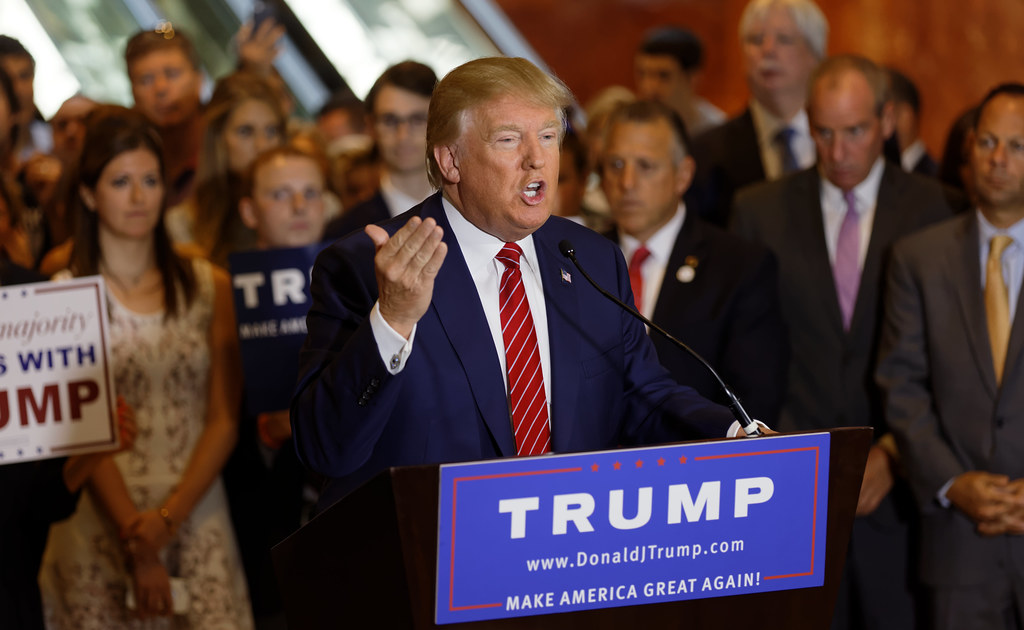
The semiquincentennial is not just a fireworks date. It is becoming a national argument over who gets to define America at a deeply polarized moment.
America’s 250th birthday was always going to be more than a long weekend with flags, concerts and fireworks. A country does not hit the quarter-millennium mark without arguing over what it has become.
That argument is now landing squarely on Donald Trump. A July 4 opinion piece in The Charlotte Observer, surfaced through MSN/Microsoft Start, cast Trump as the president America needs for its 250th birthday. The headline alone drew hundreds of reactions and comments within hours, a useful signal of where the semiquincentennial debate is headed: not just toward history, but toward power.
A birthday with a president attached
The United States will mark 250 years since the adoption of the Declaration of Independence on July 4, 2026. The official name is clunky but precise: the semiquincentennial.
On paper, that anniversary belongs to everyone. In practice, national birthdays are usually shaped by whoever occupies the White House, controls the federal spotlight and decides which themes get amplified.
That is why the Charlotte Observer opinion piece matters beyond its own argument. It puts into plain language what many political actors already understand: the 250th birthday is becoming a referendum on national identity, and Trump is impossible to separate from it.
Supporters see him as a restoration figure, a president whose language of borders, strength, sovereignty and grievance fits their view of a country that needs to reclaim itself. Critics see the opposite: a leader whose style and record make unity harder, not easier, at the very moment the country is trying to tell a common story.
The official anniversary is broader
The semiquincentennial is not a Trump project. Congress created the U.S. Semiquincentennial Commission in 2016 to help plan the anniversary, and the official America250 effort has described the commemoration as a nationwide, nonpartisan civic undertaking.
That matters. The anniversary is supposed to involve states, territories, tribal communities, museums, schools, archives, military institutions, historic sites and local organizers. It is as much about classrooms and county courthouses as it is about the president’s speech from a national stage.
The National Archives identifies July 4, 1776, as the date the Continental Congress adopted the Declaration of Independence. But even that founding document is not a simple birthday card. It is an argument about rights, representation, rebellion and legitimacy.
That gives the 250th commemoration a built-in tension. A celebration that only says America is great will feel incomplete to many people. A commemoration that only catalogs failures will feel alienating to others. The hard work is holding both truths in public without turning the anniversary into a campaign rally or a lecture hall.
Why Trump changes the frame
Every president tries to use patriotic symbolism. Trump is different because his political identity is built around a highly personal version of national renewal: make America great again, defend the homeland, punish elites, elevate loyal supporters and treat critics as part of the threat.
That language is powerful because it gives his voters a clear story. It says the country was betrayed, can be rescued and needs a fighter more than a manager. For a milestone like the 250th birthday, that story has obvious emotional force.
It also narrows the civic frame. A national anniversary asks Americans to think across generations; Trump’s politics often asks them to pick a side right now. A semiquincentennial asks for shared ownership; Trump’s movement has often defined patriotism through conflict with institutions, media, universities, prosecutors, protesters and political opponents.
That does not mean Trump cannot preside over major national ceremonies. He can, and as president he will have access to the symbols no one else can command. The question is whether those ceremonies will invite the whole country in, or tell half the country it is being tolerated at someone else’s party.
The 1976 lesson still echoes
The last giant national milestone, the 1976 Bicentennial, arrived after years of upheaval: Vietnam, Watergate, inflation, assassinations and deep mistrust in government. The country was hardly serene then, even if nostalgia has softened the picture.
President Gerald Ford used the Bicentennial moment to stress continuity and repair after scandal. The celebration leaned heavily on symbols of shared inheritance: tall ships, public ceremonies, local festivals, historic preservation and a broad sense that the American experiment had survived worse than the politics of the moment.
The 2026 version faces a different problem. Americans now inhabit far more fragmented media worlds. A speech, parade or museum exhibit is instantly filtered through partisan feeds, clipped for outrage, praised as truth or condemned as propaganda before the event is even over.
That is why a single opinion headline can travel so quickly. It gives readers a clean proposition to love or hate: Trump is not merely president during the 250th birthday; he is the president suited to define it. For supporters, that sounds like vindication. For opponents, it sounds like capture.
What readers should watch
The fight over the 250th anniversary will not only show up in speeches. It will show up in decisions that look procedural until they become political.
- Federal messaging: Which themes does the White House emphasize — unity, strength, grievance, faith, military power, economic revival, founding ideals or cultural conflict?
- Historic interpretation: How do official events handle slavery, Indigenous history, immigration, women’s rights, religious liberty and the unfinished promises of the founding?
- Local participation: Do communities feel they are shaping the commemoration, or reacting to a national script?
- Campaign overlap: Do anniversary events remain civic, or do they become indistinguishable from partisan branding?
- Public trust: Do Americans who oppose Trump still see the anniversary as theirs?
Those are not abstract questions. The 250th birthday will bring public money, official programming, school materials, tourism campaigns, museum exhibits and ceremonial language. The story America tells about itself will be edited in real time.
A celebration no one can own
The strongest version of the semiquincentennial would not require Americans to agree about Trump. It would require them to remember that the country has never been a finished object.
The Declaration made sweeping claims that the nation has spent 250 years fighting to interpret, extend, violate and defend. That is why the anniversary is too large for any one president, party or opinion column.
Still, presidents matter. They set tone. They choose villains and heroes. They decide whether a national stage becomes a bridge or a weapon.
The reaction to the pro-Trump July 4 opinion piece shows the central tension of America’s 250th birthday before the main ceremonies even begin. The country wants a celebration. It is also preparing for an argument over who gets to lead it, who gets included in it and what version of America will be placed under the fireworks.






Leave a Reply