
Lucy was not a missing link in the tidy sense. Her bones show that the traits we call human arrived in pieces, not in one dramatic evolutionary leap.
Lucy is often introduced as if she were a creature split neatly down the middle: part ape, part human, a dramatic halfway point on the road to us.
That makes for a gripping headline. But the fossil’s real power is stranger and more useful: Lucy shows that human evolution did not move in a straight line, and it did not wait for a big brain before changing the body.
Lucy was never just “half” anything
Lucy is the nickname for a partial skeleton discovered in 1974 at Hadar, Ethiopia. Scientists classified her as Australopithecus afarensis, a hominin species that lived more than 3 million years ago. The Smithsonian’s Human Origins Program places Lucy at about 3.2 million years old, making her one of the most famous windows into early human ancestry.
She was small by modern human standards, with a brain much closer in size to that of a chimpanzee than to ours. Yet her pelvis, knee and leg bones showed clear evidence that she walked upright. That combination is the reason Lucy remains so important: she did not fit the old expectation that big brains came first and upright walking followed.
Calling her “half ape, half human” can be misleading because evolution does not work like a measuring cup. Lucy was not a failed human, a proto-chimpanzee or a crude sketch of modern people. She was a successful member of her own species, adapted to her own world.
Her anatomy looks mixed only because our expectations are too tidy. Some parts of her body point toward habitual bipedal walking. Other features suggest she still had abilities useful for climbing. That is not contradiction. It is evolution doing what it often does: modifying old equipment for new pressures.
Walking came before big brains
One of Lucy’s biggest lessons is that upright walking was already well established before the dramatic expansion of the human brain. That matters because popular stories about human origins often begin with intelligence: tools, language, planning, culture.
Lucy pushes the starting point down into the body. Her skeleton suggests that our ancestors were moving differently long before they were thinking with anything like a modern human brain.
Other evidence supports that picture. The Laetoli footprints in Tanzania, usually dated to about 3.66 million years ago, preserve tracks made by early hominins walking upright across volcanic ash. They are not Lucy’s footprints, but they belong to the same broad world of early bipedal hominins.
Taken together, the bones and footprints make a sharp point: the human story did not begin with a sudden spark of genius. It began, in part, with a new way of getting around.
The tree question still matters
Lucy’s skeleton also keeps one debate alive: how much time did Australopithecus afarensis still spend in trees?
Her lower body supports upright walking. Her upper body, including relatively long arms and shoulder features, has often been discussed as evidence of climbing ability. Some researchers argue these traits reflect active tree use. Others caution that inherited anatomy can linger even after behavior changes.
This is where Lucy becomes more interesting than a simple “missing link.” She may represent a creature that walked on the ground while still benefiting from the trees for food, safety or sleep. That would not make her less advanced. It would make her well suited to a landscape where flexibility mattered.
A 2016 study published in Nature even argued that fractures in Lucy’s bones were consistent with a fall from a great height, possibly from a tree. That interpretation has been debated, but the argument itself shows how much information scientists still try to extract from one partial skeleton.
Evolution is not a ladder
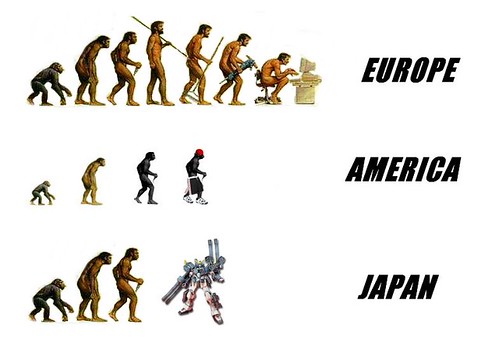
Lucy is famous partly because she tempts people into a ladder-like view of evolution: ape at the bottom, human at the top, Lucy somewhere in the middle. Scientists have spent decades trying to dismantle that picture.
Human evolution looks more like a branching shrub than a staircase. Multiple hominin species existed at different times, with different combinations of traits. Some walked upright but had small brains. Some made tools. Some overlapped in time. Some left descendants; many did not.
That branching view changes what Lucy means. She is not important because she is “almost us.” She is important because she proves that the ingredients of humanity appeared separately. Bipedal walking, tool use, larger brains, smaller teeth, complex social behavior and language did not arrive as a package deal.
This is why paleoanthropologists talk about “mosaic evolution.” Different body systems evolved at different rates. Lucy’s mosaic is visible in bone: a small-brained hominin with a body partly committed to walking upright and partly shaped by an older primate heritage.
Climate may be part of the story
Another reason Lucy still matters is that she lived in a changing world. The old “savanna hypothesis” suggested that drying African environments pushed early humans out of trees and onto open grasslands. That idea was simple and memorable, but the evidence has become more complicated.
NOAA Climate.gov has highlighted the work of Rick Potts of the Smithsonian Institution, who developed the “variability selection” hypothesis. Instead of one steady environmental trend forcing one adaptation, the idea emphasizes repeated swings between different conditions. In that view, adaptability itself becomes a major evolutionary advantage.
That frame fits the broader lesson Lucy offers. A creature with both walking ability and possible climbing ability may not look like an awkward halfway form. It may look like an animal able to manage a world that was not stable.
Climate did not “create humans” in a simple one-cause way. But shifting habitats, food sources and survival pressures likely helped shape which traits mattered. Lucy’s world was not a stage set waiting for modern humans to appear. It was a real environment, full of risk, opportunity and competition.
The mystery is the point
Nearly half a century after her discovery, Lucy still attracts attention because she answers one question while opening several more. She confirms that upright walking is ancient. She complicates the relationship between ground life and tree life. She shows that small-brained hominins could already possess traits central to the human lineage.
She also warns against turning fossils into slogans. “Half ape, half human” sounds dramatic, but it flattens the science. Lucy was not half of two things. She was whole in herself, and that is why she is so revealing.
The secret she holds is not a single missing ingredient that made humans human. It is the opposite: there was no single switch. Human origins were pieced together over millions of years, through anatomy, behavior, environment and chance.
Lucy endures because she makes the familiar story harder to tell. And in science, that is often the fossil that matters most.











Leave a Reply